Homily for Corpus Christi
3 Meanings of Body and Blood of Christ
Fr. Fred Wekesa, osa
5/31/20264 min read
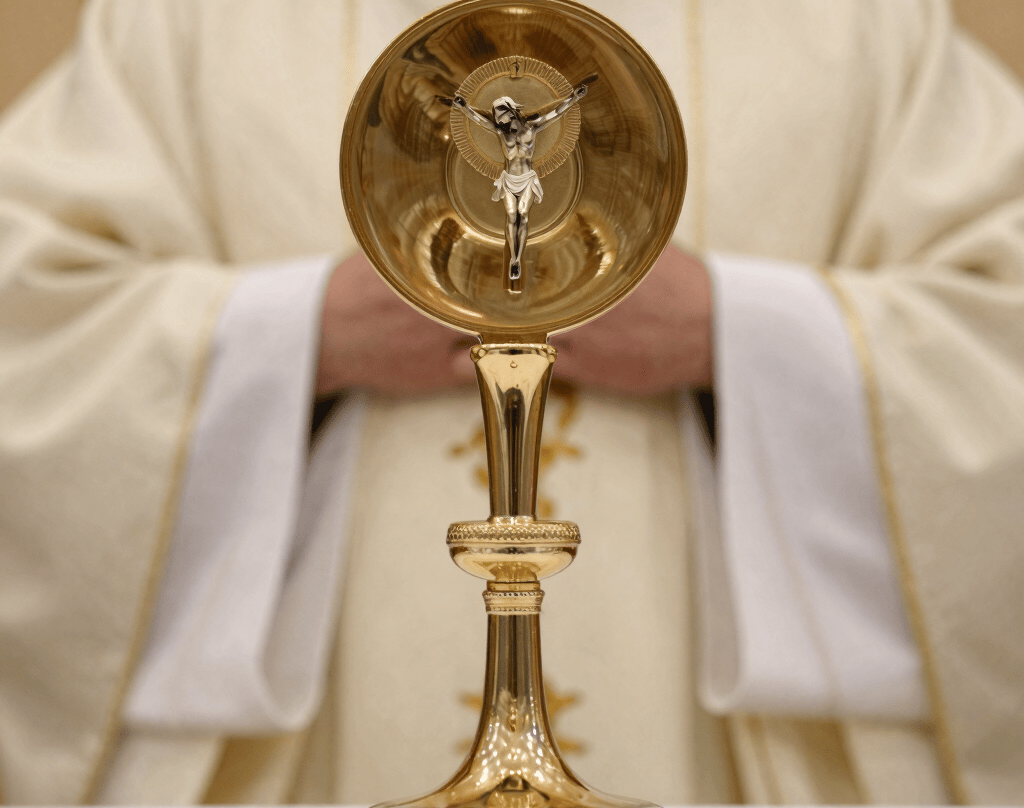
SUNDAY HOMILY FOR THE BODY AND BLOOD OF CHRIST YEAR A
Solemnity of Body and blood of christ, Corpus Christi
3 MEANINGS OF THE BODY OF CHRIST
1st Reading: Deuteronomy 8:2-3, 14b-16a
Psalm: Psalm 147:12-15, 19-20
2nd Reading: 1 Corinthians 10:16-17
Gospel: John 6:51-58
This is a Sunday homily for the Body and blood of Christ year A. This Sunday is also referred to as Corpus Christi. On this Sunday, we reflect on the 3 meanings in understanding the Body and blood of Christ as proposed by the later fathers of the church and finally, what we can obtain from the Holy eucharist as Christians today.
To begin with, two weeks ago, we celebrated Pentecost Sunday to mark the descending of the Holy spirit on the apostles and also, we ended easter season hence restarting ordinary time. Now, there are two feasts that occur just after Pentecost Sunday which are called Transitional feasts that is the solemnity of the Holy trinity and the solemnity of the body and blood of Christ that we are celebrating this Sunday.
More importantly, when we look at the liturgical calendar for each year, we realize that the feast of Corpus Christi or body and blood of Christ is celebrated twice differently. This implies that on Holy Thursday we celebrated the institution of the holy eucharist or the body and blood of christ and on this Sunday, we are celebrating again the Body and blood of Christ. Why do we have to repeat it then? There are two reasons for that namely 1. Pastoral reason because on Holy Thursday, we had more pastoral engagements due to easter preparations and therefore we would not have enough time to meditate on the presence of Christ in the Holy Eucharist. Secondly, the importance of the Holy eucharist as the summit for our Christian faith makes us to celebrate it twice per liturgical year.
What are the 3-fold meanings of the Body and blood of Christ today? History of the church teaches us that the later fathers of the church and early medieval theologians assigned 3 implications or meanings to understand the Body and Blood of Christ. When we say they Body and blood of Christ, it means 1. The Physical body of Jesus that he acquired from his mother the Blessed Virgin Mary, the body that walked on this world, the body of Christ that ate with the disciples, the physical body that was crucified at Calvary on the cross and the physical body that is seated at the right hand of God in heaven. 2. The body of Christ refers to the mystical body that is present in the Holy Eucharist. This means that after consecration, bread and wine species become the real body and blood of Christ hence his presence is real and perpetual in a mystical way. Finally, the body of Christ also refers to the Church as the people of God. This body of Christ consists of members who partake in the Holy Eucharist therefore forming a «a community of believers ». Among the three meanings of the body and blood of christ, of special interest to us on this Corpus Christi Sunday, is the reference to the Holy Eucharist as one of the seven sacraments in the Catholic church. Analogically speaking, just like our physical bodies need food to get energy to survive, so too our soul needs spiritual food. In fact, in the gospel text today, we find very crucial teachings about the Holy eucharist. Moreover, the gospel text comes from one of Jesus’ discourses at Capharnaum. After the multiplication of bread, Jesus left the region but the crowd followed him to look for a physical bread. When Jesus spotted them, he took the opportunity to teach them about the meaning of the living bread. In a more simple language, Jesus teaches using verbs such as to “eat” that comes up 8 times in this text, to drink and to have eternal life.
What does the Holy eucharist give us today? It gives us grace to live in communion and also to have eternal life. For example, one day after celebrating mass, I observed that one Christian who often comes for Holy mass on Sunday is a taxi driver. One Sunday after Holy mass, he started calling out passengers who would go to town, but the fare was hiked to take advantage of many people travelling. On the other hand, there was an old man who didn’t have enough money to pay for his transport fee therefore the taxi driver refused to listen to his pleas and drove off towards town. Now, while in the church, especially during Holy communion, they both lined up, received and said amen after receiving the Holy communion. Now frankly speaking, who was transformed among this people? Is it the taxi man who hiked the fare or the Christians who did not pay for the hiked price for the old man or the old man who had normal fare? In fact, St. Augustine reminds us to become what we receive meaning to be in communion with the less fortunate, to help those who are disadvantaged in our midst, to live in communion as a family, to listen to those who don’t have anyone to listen to and to share what we have with others. Remember as the first reading reminds us that just like the people of Israel thought that it Moses who gave them bread from heaven, mana, but in reality, it was God who gave them food, it was God protected them in the desert and saved them from the land of slavery. In my opinion, this is the true meaning of participating in the Holy communion not only in church but to live it in our daily lives.
To conclude, on this Sunday of the body and blood of Christ year A, we are reminded that the Holy Eucharist is important to our Christian life because Christ is real, perpetual and ever present. AMEN.
HAVE A BLESSED CORPUS CHRISTI SUNDAY!!!!!