Homily for Christmas 2025
This Christmas 2025 homily reflects on the mystery of the Incarnation through Saint John’s Gospel, “The Word was made flesh.” It explores the meaning of Christ’s coming into human fragility, the varied human responses to Him, and the true essence of Christmas today. The reflection invites believers to allow Christ to be born anew in their lives through faith, love, forgiveness, and concrete witness to the light of Christ in the world.
CHRISTIAN LIVING
Fr. Fred Wekesa
1/4/20264 min read


This is a Homily for Christmas 2025 on the day that we celebrate the Nativity of our lord. Merry Christmas to you all!!!! Today, we are reflecting on “The word was made flesh” according to the gospel of Saint John. What does this statement mean to us as Christians today? On this Christmas day, we give and receive wishes of Merry Christmas to one another, give and receive gifts, dress well and eat well and even more importantly, some become more generous during this Christmas period. However, at times, we find ourselves in very challenging situations during this Christmas period such as: How would we wish a Merry Christmas to a suffering individual or a less fortunate or a poor person in our midst today? Finally, what is the essence of Christmas to us today?
On this Nativity of our lord, we read the gospel according to saint John 1:1-18. This is a prologue that has 3 main objectives namely:
1. To describe God’s relationship to man through the word.
2. To teach us that the word became flesh is Jesus who was born at Bethlehem 2000 years ago.
3. The reactions of man towards the word was made flesh.
Moreover, in this prologue, we find some important themes mentioned that Saint John explains later in his gospel, for example, we find the theme of light, Faith, Truth, revelation and Darkness.
Another aspect seen from this prologue is the downward movement of the WORD that is poetically described in this passage, we can note that there are 3 downward or descending movements of the word and the word here means Jesus: here are the movements:
1. The first downward movement of the word as light was coming into the world but the world didn’t recognize this light as seen in John 1:9.
2. The Second movement of the word was towards his own domain which could be Israel, but they did not accept him as seen in John1:11
3. The Third and final movement is the word was made flesh and dwelt among us, lived among us and it resulted into us seeing his glory as seen in John 1:14. All in all, Human reactions towards the word made flesh is characterized by both rejection and acceptance.
Let us examine the 3rd movement which forms part of our reflection on this Christmas day. This is “The word was made flesh”. What does this statement mean? In order to grasp the meaning of this statement, I would like to use a human language and example of words to illustrate it such as ‘I love you’ uttered by a husband and a wife which could result to a child. Logically speaking, it is from the idea in their mind, expressed in words then the action that results to a child.
Now, this prologue attests that the word means Jesus Christ who was born at Bethlehem 2000 years ago. In fact, John’s gospel plays a complimentary role because it traces the origin of Jesus beyond where the synoptic gospels stopped. This is to say that the word or Jesus pre-existed before creation, existed during creation of the world and even exists presently.
Another aspect to be taken from the statement “the word was made flesh” is the term Flesh. It does not mean our physical body but rather our humanity, our fragility or our limitedness. Therefore, Jesus took on our human nature except sin hence incarnation. In addition, Jesus as the word, he needed a voice, and this voice was John the Baptist who prepared the way for the Messiah, bore witness and introduced the Messiah people.
On this Christmas day, one essential thing is to focus on the person of Jesus Christ who makes us to feel the closeness of God much more than he was closer to the people of Israel as seen in the First Testament.
Is Christmas all about wishing each other Merry Christmas or What is the essence of Christmas today? As we commemorate Jesus’ birth, let him be born in our lives, in our families and in our world today. In our churches today on this feast of nativity, the assembly of Christians can be categorized into the following groups.These are:
1. The Regular Christians, these are Christians who after their baptism they are consistent, active and try to live the gospel values in their daily lives. They frequent Holy mass in church from January to December.
2. The Irregular Christians. They show up during mass for some Sundays then seat at home or work on Sundays to gain more money or come to church whenever there is a feast, or if they need to get some sacraments, or when they need recommendations from the church or when they have lost their loved ones and therefore, they attend only funeral mass.
3. The Divine surprise Christians. These are Christians who remain at home most of the time, they do all manner of things, but they come to church during Christmas vigil mass or even on Christmas day, but they make noise during preaching time because they are not sober or they are excited, they also appear in any church, and it becomes hard for them to follow the church proceedings. On Christmas day, they send or forward merry Christmas messages to any person who is in their contact or whom they have never communicated with for the last year or years. You hardly miss this kind of persons every Christmas. With the 3 above categories, which one would you identify yourself with?
On this Christmas Sunday 2025, we are invited to let Christ be born in our lives by loving, sharing and forgiving those who wronged us just like Christ reconciled us with God. Let us allow the messiah as light to enlighten us to have solid faith, to give us grace to follow him faithfully and to become strong witnesses of kindness, mercy and caring for one another. AMEN.
MERRY CHRISTMAS AND HAPPY NEW YEAR 2026!!!!!!
Fr. Fred Wekesa
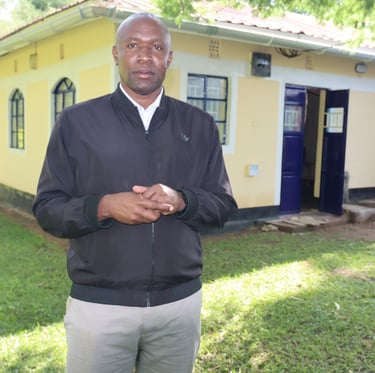
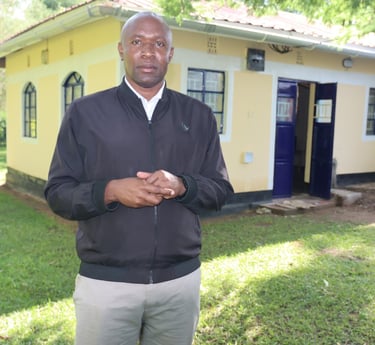
Fred Wekesa is an Augustinian catholic priest from St. Rita Vicariate in kenya. He is an Author of several books such as "Augustinian Friendship" and "L'Amitié Augustinienne". He is a counselling Psychologist with a Master's degree in counselling psychology from Mount Kenya Unversity. Currently, He is a Doctoral student in COUNSELLING PSYCHOLOGY at Mount Kenya University. He is a Rector of Saint Augustine Basilica, Annaba, Algeria.